Hello everybody, I hope you are having an amazing day today. Today, I will show you a way to make a distinctive dish, sloe-boshi (a sacreligious seasonal version of umeboshi). It is one of my favorites food recipes. For mine, I will make it a little bit tasty. This will be really delicious.
Sloe-boshi (a sacreligious seasonal version of umeboshi) is one of the most popular of current trending meals in the world. It’s appreciated by millions daily. It’s simple, it’s fast, it tastes yummy. Sloe-boshi (a sacreligious seasonal version of umeboshi) is something that I have loved my entire life. They are nice and they look wonderful.
Great recipe for Sloe-boshi (a sacreligious seasonal version of umeboshi). In Japan, there's a character called Suppaman. He's a bit like Umeboshi is a fermented sour plum.
To begin with this particular recipe, we have to first prepare a few components. You can cook sloe-boshi (a sacreligious seasonal version of umeboshi) using 2 ingredients and 5 steps. Here is how you cook that.
The ingredients needed to make Sloe-boshi (a sacreligious seasonal version of umeboshi):
- Get 300 g sloes
- Make ready 30 g salt
We traveled there to visit umeboshi maker Shōkibai and some ume growers in the town of Minabe for a behind-the-scenes glimpse at how the fruit is They are then removed from the tanks and dried in the sun for three or four days. This produces the basic, traditional umeboshi , the shira-boshi pickled plum. Umeboshi are pickled (brined) ume fruits common in Japan. The word umeboshi is often translated into English as 'salted Japanese plums', 'Japanese plums' or 'preserved plums'.
Instructions to make Sloe-boshi (a sacreligious seasonal version of umeboshi):
- Gather up your ingredients. You'll need 10% of the weight of your sloes in salt. You'll also need a jar to ferment them in, and a sandwich bag to act as a weight.
- Rinse your sloes
- Mix the sloes and salt
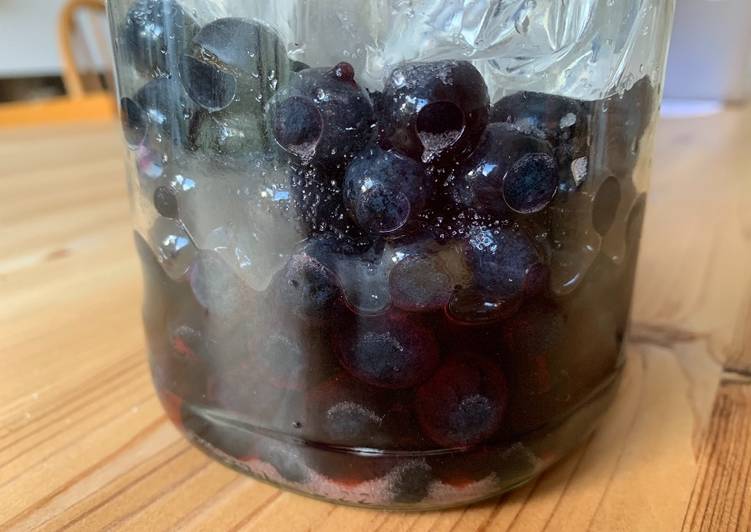
- Pack them into the jar, then add the sandwich bag on top. Fill it a bit with water to act as a weight.
- Now wait. Over the next few days, the liquid will start to leach out of the sloes and mix with the salt to create a brine, which will cover the tops of the sloes. The sloes will ferment in the brine, and after 10 days should be done. Give one a try. Once they're done, drain of the liquid (keep it), and dehydrate the sloes. I'll add steps once I have got this far!
You all waited for it and today I had some time to finish it. This picture was a real pain xD So much details and time spend on it and I'm still not satisfied. Frugality led me to it: A vegetarian roll made with salty plum paste and grassy shiso leaves was a very pleasant way to keep my bill in check. Though the common translation for "ume" is "plum," in fact the tiny, tart fruit is more closely related to an apricot. Pickled, the fruits are called umeboshi. sacreligious.
So that’s going to wrap this up with this exceptional food sloe-boshi (a sacreligious seasonal version of umeboshi) recipe. Thanks so much for your time. I’m confident you will make this at home. There’s gonna be more interesting food in home recipes coming up. Remember to bookmark this page on your browser, and share it to your family, friends and colleague. Thank you for reading. Go on get cooking!