Hey everyone, it is me, Dave, welcome to our recipe site. Today, I’m gonna show you how to prepare a special dish, healthy macrobiotic vegetable gyoza. It is one of my favorites. This time, I’m gonna make it a bit tasty. This will be really delicious.
Healthy Macrobiotic Vegetable Gyoza is one of the most well liked of recent trending meals in the world. It’s easy, it’s quick, it tastes yummy. It is appreciated by millions every day. Healthy Macrobiotic Vegetable Gyoza is something that I have loved my entire life. They’re nice and they look wonderful.
Vegetable Gyoza (野菜餃子) Gyoza are small Japanese potstickers that are most commonly made by filling a thin round wrapper with a mixture of pork and cabbage. The flavorful seasonings and umami-rich cabbage doesn't need meat to taste good, though. Great recipe for Healthy Macrobiotic Vegetable Gyoza.
To begin with this recipe, we have to prepare a few components. You can cook healthy macrobiotic vegetable gyoza using 13 ingredients and 8 steps. Here is how you cook that.
The ingredients needed to make Healthy Macrobiotic Vegetable Gyoza:
- Get 30 Gyoza wrappers
- Get 2 Koya-dofu (freeze-dried tofu)
- Take 5 leaves Cabbage
- Take 1 knob Ginger
- Make ready 15 cm Green onions or scallions
- Get 1 Spring onions or scallions
- Prepare 70 grams Maitake mushrooms
- Take 1 large, King oyster mushroom
- Make ready 1 tbsp ●Soy sauce
- Get 2 tbsp ●Sesame oil
- Make ready 1 tsp ●Beet sugar
- Make ready 1 tsp ●Vegetarian Chinese stock powder (optional)
- Make ready 1 tsp at a time ★Plain flour (dissolved in water) to finish pan frying
You get to have both the memories and a good taste of the Japanese cuisine. Vegetable Dumplings - Vegan Gyoza (Jiaozi) Vegan Gyoza is one of my all-time favorite foods to eat when I'm in a Japanese or Chinese restaurant. These Potstickers are usually served steamed with a crispy bottom and filled with healthy vegetables. Vary this noodle classic by choosing a different ready-prepared vegetable pack - the Waitrose & Partners Tenderstem Broccoli and Mangetout Stir Fry works really well.
Instructions to make Healthy Macrobiotic Vegetable Gyoza:
- Soak the koya-dofu in water to rehydrate. Put the cabbage into a food processor to chop. Transfer the chopped cabbage into a bowl. Sprinkle with salt (not listed in the ingredients) and leave to sit for 20 minutes. Squeeze out the water from the cabbage.
- Pulse the koya-dofu in your food processor, transfer to a separate bowl, and set aside.
- Put the green onions, spring onions, king oyster mushroom, and maitake mushrooms into a food processor and chop finely. Grate the ginger.
- Combine the ingredients from Steps 1, 2, and 3 with ● seasonings in a bowl and mix well. Wrap the mixture with gyoza pastries and pan fry.
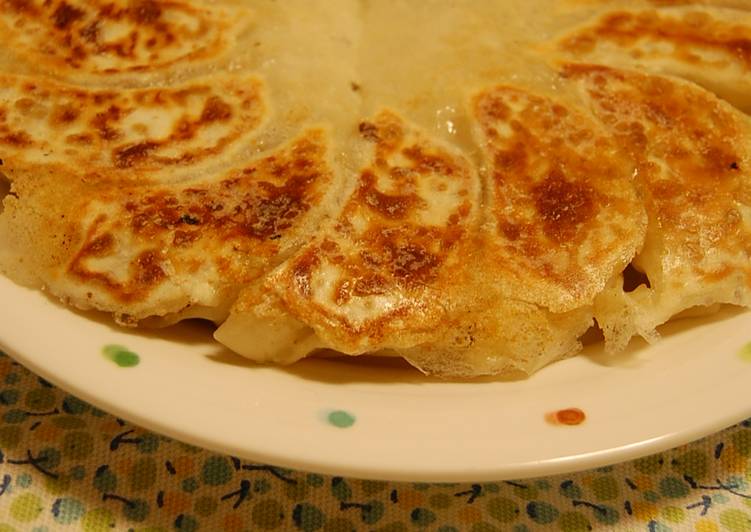
- [Tips for frying:] Heat some sesame oil (not listed in the ingredients) and arrange the gyoza in circle. Fry over medium heat for 4 to 5 minutes. Agitate the frying pan occasionally.
- After the bottom of the gyoza has browned, drizzle over a slurry of 50-60 ml water and 1 teaspoon ★ plain flour. Cover with a lid and reduce the heat to low. Continue to fry for about 3 minutes.
- Uncover the lid and turn the heat to high. Evaporate the water and cook until crispy. The gyoza with crispy bits are done.
- This packet of Chinese stock powder is vegetarian, but if you can't find it, simply omit it.
A few days ago I shared a recipe for Japanese Dumplings or Gyozas. These take a few minutes to make. Just pick up some dumpling wrappers at your grocery store or Asian food store with a few filling ingredients and you're good to go. The filling is made of cabbage and mushrooms. I made revisions as suggested in the recipe description to make these non-vegetarian (replaced part of the mushroom portion with surimi and ham).
So that is going to wrap this up for this exceptional food healthy macrobiotic vegetable gyoza recipe. Thank you very much for your time. I am sure you will make this at home. There’s gonna be interesting food at home recipes coming up. Remember to bookmark this page on your browser, and share it to your family, colleague and friends. Thank you for reading. Go on get cooking!