Hey everyone, hope you’re having an amazing day today. Today, we’re going to make a special dish, easy macrobiotic kabocha squash pudding. One of my favorites. For mine, I am going to make it a bit tasty. This will be really delicious.
Steam the kabocha squash, peel the skin, and put into a food processor. (I peeled it this time 'round for the sake of the photos, but you can also use unpeeled kabocha. It will result in a pudding with a slightly rougher texture, but it's still delicious.) Combine all ○ ingredients in a food processor and blend. Great recipe for Macrobiotic Recipe Kabocha Squash Pudding.
Easy Macrobiotic Kabocha Squash Pudding is one of the most well liked of recent trending foods on earth. It’s simple, it is quick, it tastes delicious. It’s enjoyed by millions every day. Easy Macrobiotic Kabocha Squash Pudding is something that I’ve loved my entire life. They’re fine and they look wonderful.
To begin with this recipe, we must prepare a few ingredients. You can cook easy macrobiotic kabocha squash pudding using 12 ingredients and 7 steps. Here is how you can achieve that.
The ingredients needed to make Easy Macrobiotic Kabocha Squash Pudding:
- Make ready 160 grams ○Kabocha squash
- Take 100 ml ○Soy milk
- Get 3 tbsp ○Beet sugar, oligosaccharide, or maple syrup
- Prepare 1 tbsp ○Kudzu powder
- Take 1 pinch ○Salt
- Take 1 1/2 grams ●Powdered kanten
- Prepare 3 tbsp ●Water
- Get 1/2 stalk or a few drops Vanilla beans or vanilla essence
- Take 1 Steamed azuki beans (optional)
- Take 1 Steamed kabocha squash skin
- Get 1 Or, kabocha squash seeds
- Get 1 Kinako
When cooked through, drain off the water. Add to a food processor (or blender), along with half of the soy milk, maple syrup, light brown sugar and salt. Pour the remaining soy milk into a pot, and sprinkle in the kanten powder. The main ingredients for this Kabocha pudding are squash pulp and almond milk.
Instructions to make Easy Macrobiotic Kabocha Squash Pudding:
- Steam the kabocha squash, peel the skin, and put into a food processor. (I peeled it this time 'round for the sake of the photos, but you can also use unpeeled kabocha. It will result in a pudding with a slightly rougher texture, but it's still delicious.)
- Combine all ○ ingredients in a food processor and blend.
- Now put all the ● ingredients into a small pan. Bring to a boil, and simmer for 1 minute (to eliminate the grainy texture of kanten).
- Add the kanten mixture from Step 3 to the Step 2 blended kabocha mixture, and also add the vanilla beans (if using). Bring it to the boil again and let simmer for 2 and a half minutes until thick and smooth. (The mixture will thicken as a result of heating the kudzu flour.)
- Turn the heat off and let it cool down slightly (if you're using vanilla essence instead of vanilla beans, add it at this point). Pour into a mold and chill in the fridge for an hour.
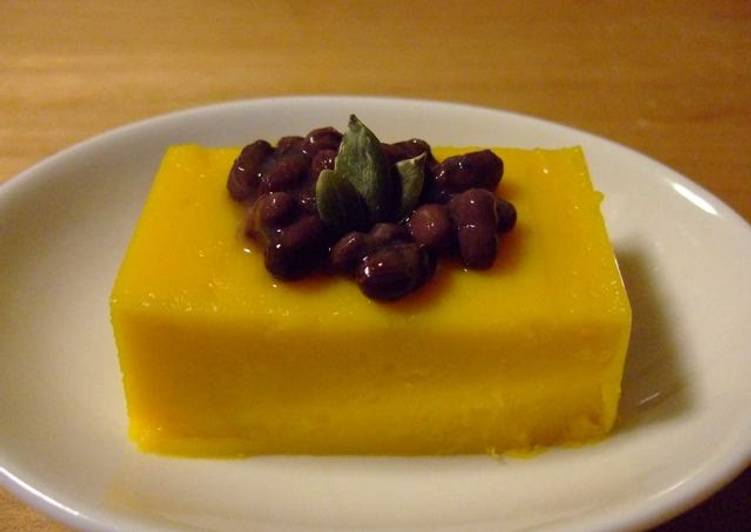
- Remove from the mold and slice. Decorate with toppings of your choice. (Here, I used adzuki beans that I already had steamed. They're unsweetened, but still go great with the pudding).
- Also check out my "Macrobiotic Pumpkin Potage and Curry for Kids" []. I always have this up my sleeve for when I'm stuck for something to make.
A little maple syrup is used as the sweetener and agaras the gelling agent. Today, I will show you a way to prepare a special dish, kabocha squash pudding. For mine, I am going to make it a bit unique. Kabocha Squash Pudding is one of the most popular of recent trending foods on earth. If you increase the number of times you strain the mixture it will become even smoother.
So that is going to wrap it up with this special food easy macrobiotic kabocha squash pudding recipe. Thank you very much for your time. I’m sure that you will make this at home. There’s gonna be more interesting food in home recipes coming up. Don’t forget to save this page on your browser, and share it to your loved ones, friends and colleague. Thank you for reading. Go on get cooking!