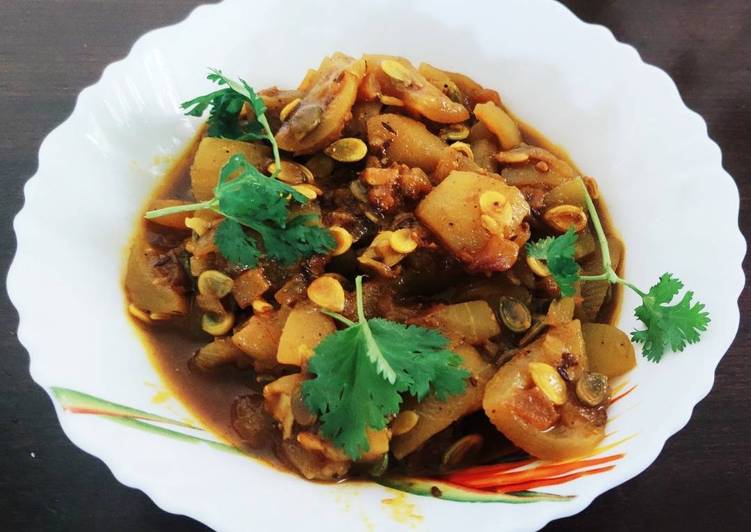
Hey everyone, hope you’re having an amazing day today. Today, I’m gonna show you how to prepare a distinctive dish, korean simmered daikon radish soboro. It is one of my favorites. For mine, I’m gonna make it a bit tasty. This is gonna smell and look delicious.
Korean Simmered Daikon Radish Soboro is one of the most well liked of current trending meals in the world. It’s enjoyed by millions every day. It is easy, it is quick, it tastes yummy. Korean Simmered Daikon Radish Soboro is something which I have loved my whole life. They are nice and they look wonderful.
About halfway through, check on the ingredients and give the simmering sauce a quick mix. When most of the liquid has been absorbed, it's done! This simmered daikon with soboro is an authentic Japanese recipe that can be integrated into almost any meal as a side dish or starter.
To begin with this recipe, we must first prepare a few components. You can cook korean simmered daikon radish soboro using 14 ingredients and 5 steps. Here is how you can achieve it.
The ingredients needed to make Korean Simmered Daikon Radish Soboro:
- Make ready 400 grams Daikon radish
- Make ready 100 grams Ground pork (or beef or pork blend)
- Make ready 4 tbsp ※ Korean all-purpose seasoning
- Get ※ Or these seasonings
- Take 1 1/2- tablespoons Gochujang
- Prepare 1 tbsp Soy sauce
- Take 1 tbsp Sugar
- Make ready 1 tbsp Vinegar
- Take 1 tbsp Ground white sesame seeds
- Prepare 1 tsp Sesame oil
- Prepare 2 cm Grated ginger (or tubed)
- Take 1 Vegetable oil for frying
- Prepare 3 cm Grated ginger (or tubed)
- Make ready 1 Chopped green onions (leafy green onion, asatsuki chives)
It's vegan and oil-free, healthy and easy way to try the flavor of Japanese cooking that is not sushi or tempura! We've cooked many dishes with daikon radish. Daikon radish salad my korean kitchen korean pickled radish 치킨무 it s kkakdugi cubed radish kimchi recipe pickled radish en mu 치킨무. Korean Simmered Daikon Radish Soboro Recipe By Cookpad An Korean Pickled Radish 치킨무 It S My Dish READ Aidells Cajun Style Andouille Sausage Recipes.
Steps to make Korean Simmered Daikon Radish Soboro:
- Cut the daikon radish (1/3 = 400 g) in half vertically, then cut into rough wedges. This makes sure that the texture of the daikon remains intact while helping it absorb all the flavors of the seasonings.
- Put some oil in a deep frying pan and add the ground pork and ★ ginger and fry well. Add the daikon radish and stir-fry it until it's well coated with oil.
- Add in enough water to cover the ingredients (not listed in the ingredients) and cover with a lid. When it starts to boil, reduce the heat to medium and cook for 10 minutes. When the daikon radish is about 80-90% cooked through, add the ※ seasonings.
- Put a small lid that sits right on top of the food (otoshibuta or drop lid) and cook on low heat for 7-8 minutes. About halfway through, check on the ingredients and give the simmering sauce a quick mix. When most of the liquid has been absorbed, it's done!
- Turn off the heat and let sit covered for about 10 minutes. Let the flavors marry and settle in. Transfer to a plate and sprinkle with chopped green onions.
Korean Simmered Daikon Radish Soboro Recipe By Cookpad An READ Millet Flour Nutritional Value.. Braised Japanese daikon radish, known simply in Japanese as "daikon no nimono" is a very common dish that is served in the winter when daikon is typically in the season. Slowly simmering the daikon brings out its natural sweetness and highlights the mellowness of this root. While grated raw daikon is often served as a spicy and pungent garnish to different Japanese foods, when daikon is. A simple braised white radish (daikon) becomes a surprisingly tasty dish when cooked in a thick soy flavoured sauce with pork mince (ground pork).
So that is going to wrap it up for this exceptional food korean simmered daikon radish soboro recipe. Thank you very much for reading. I’m sure you can make this at home. There is gonna be interesting food in home recipes coming up. Remember to save this page on your browser, and share it to your loved ones, friends and colleague. Thanks again for reading. Go on get cooking!